Loading...
How to Manage Your Tasks Effectively?
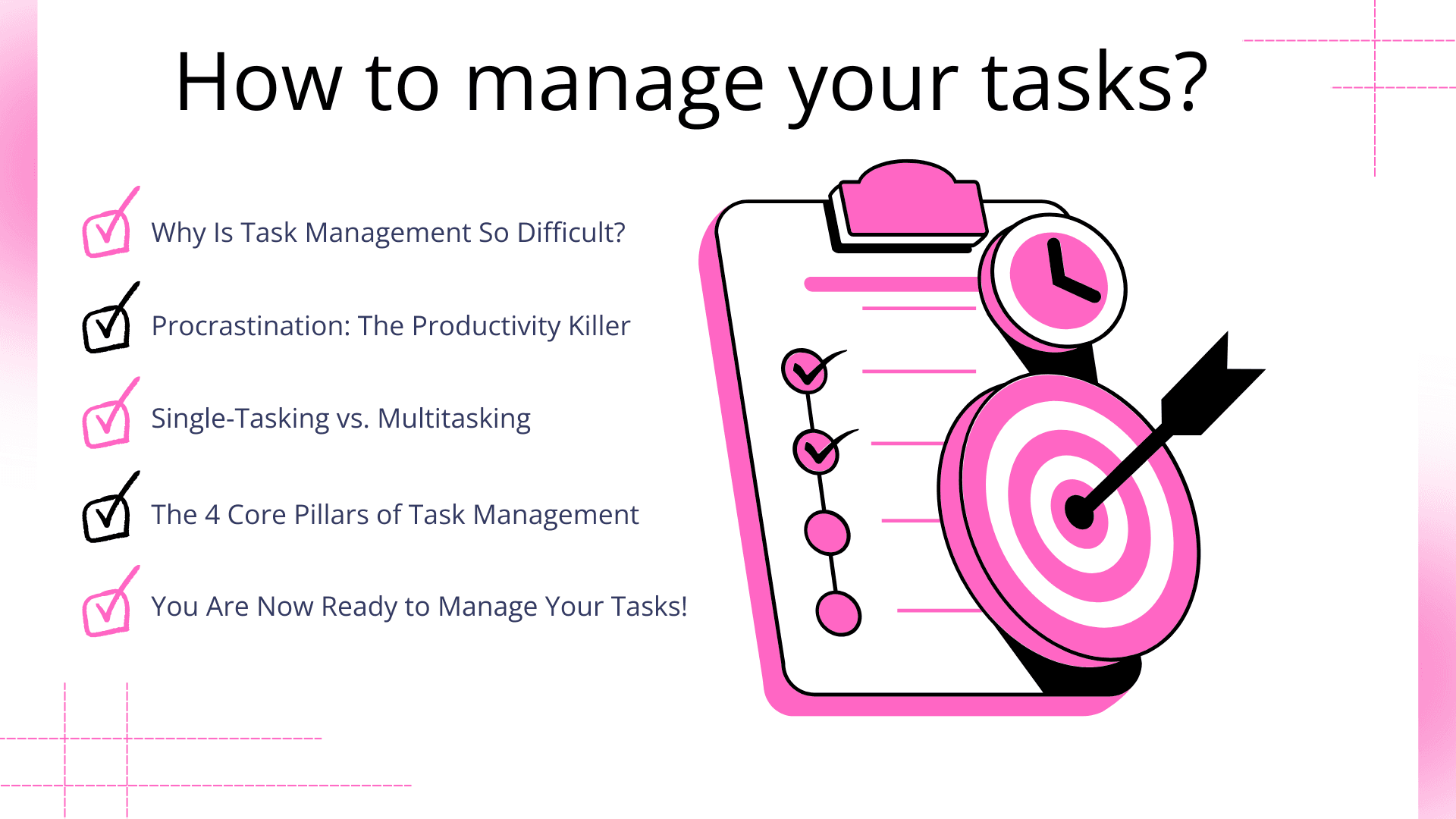
Why Is Task Management So Difficult?
Task management has evolved over time. Today, staying on top of things requires speed and decisive action. Over twenty years ago, working hard was enough to succeed. However, today's world operates on a different principle: working smarter, not harder.
Managing tasks is essential for personal growth and vital for project execution. It defines the personal and professional projects that shape our lives. Effective task management reduces mental overload, optimizes time, and brings ultimate clarity. Everyone tackles tasks of varying difficulty daily. Yet, the biggest frustration is hitting a breaking point—where despite completing a massive volume of work, your productivity plummets.
Task management feels difficult because it is rarely just an organizational problem: it is an emotional and disciplinary challenge. Here is how the cycle usually plays out:
- Step 1: You pick a task and too often, it's the easiest, lowest-value one.
- Step 2: You think about the task.
- Step 3 (The Emotional Trigger): You overthink every detail and potential roadblock.
- Step 4: You convince yourself to do it "later, when I feel more ready."
And just like that, days or weeks slip by.
The task itself isn't the problem. The overwhelming mental resistance before you even begin is the real barrier. History proves that no task is inherently impossible: humans can accomplish anything they set their minds to.
Procrastination: The Productivity Killer
Procrastination is a thief of time. When it comes to productivity, it stands as one of the biggest roadblocks preventing people from making massive strides in their projects. It paralyzes decision-making and stops you from taking the effective action needed to reach your goals. Ultimately, procrastination traps countless individuals into working harder instead of working smarter.
The 5 Root Causes of Procrastination
Everyone has the potential for flawless task execution, yet most people struggle to admit that procrastination is their primary hurdle. Even those who recognize it often cannot pinpoint exactly why they put things off.
While procrastination triggers vary, you must first identify your own specific bottleneck to overcome it. Here, Rylaa breaks down the 5 universal factors behind procrastination:
- Lack of interest
- Lack of motivation
- Lack of skills
- Lack of courage
- Lack of control
*Lack of Reliable Tools (bonus)
Lack of Interest
When you aren't passionate about what you do, the urge to procrastinate spikes. Delaying and avoiding tasks become your default settings when the work feels draining.
The only way out is to reconnect with what drives you. Finding the inner drive to push through boring, repetitive tasks is the ultimate key to breaking this cycle.
Lack of Motivation
A drop in motivation stems from multiple sources. Facing setbacks or failures naturally drains your drive, whereas achieving consistent wins naturally supercharges it.
Motivation relies heavily on both physical and mental stamina. To maintain it, prioritize a healthy lifestyle to keep your energy high. Motivation is your engine and just like fuel for a car, it dictates how far you can go.
Lack of Skills
Many people abandon their goals simply because they feel unequipped. That is why continuously developing skills in areas that advance your goals is non-negotiable.
If upskilling isn't an option right now, delegation is your best alternative. Hand over those specific tasks to the most qualified people who can get the job done right.
Lack of Courage
Fear is the polar opposite of courage. People frequently put off critical milestones simply because the sheer volume of work feels intimidating. Unfortunately, delaying the work only compounds the pressure as your deadlines shrink.
If fear overwhelms you regarding the volume of each task in your project, you must absolutely use a to-do list. It provides a clear structure for the workload and the time required for each task. By estimating this duration, you will no longer suffer from the fear that paralyzes you.
If the tasks in question require more than a single day of work (long-term tasks) and your tolerance level is low, it is useful to break the work down into several elements. Try to focus on smaller parts at a time.
Lack of Control
When individuals feel they no longer control their circumstances, procrastination skyrockets, sometimes leading to total burnout or project abandonment. This breeds helplessness, resulting in missed deadlines or sub-par work quality.
To regain control, you must shed any pessimistic mindset that kills your momentum. Start celebrating small wins. Promise yourself a reward for every milestone hit—and follow through. Whether it's a great meal, a favorite hobby, or a personal gift, building this reward loop trains your brain to love progress. After all, if you don't celebrate your own success, who will?
Lack of Reliable Tools
The problem is obvious: we all need a productivity app. Society has evolved, and projects have become increasingly complex and demanding, especially in a professional setting.
The illusion of the to-do list alone:You think a simple list of tasks is enough to manage a project. But a to-do list without hierarchy is just a list of stress. A basic checklist simply won't cut it anymore because what you truly need is a real system where every project integrates the right tools.
That is exactly why we built the ultimate unified task management system, designed to live seamlessly right inside your project.
Single-Tasking vs. Multitasking
Life can often become more complicated than we&aquos;d like. Between family, clients, school, or a 9-to-5 job, effectively managing your workload can quickly turn into a major challenge.
To stay productive, we usually try to tackle our tasks either one by one or all at once. But which approach actually delivers results: single-tasking or multitasking?
Single-Tasking: The Winning Approach
Single-tasking means focusing on just one thing at a time. This method supercharges focus, eliminates distractions, and drastically improves the quality of your output.
Multitasking: The Productivity Killer
Multitasking involves juggling multiple tasks at the same time. While it creates the illusion of speed, it scatters your attention and spikes your error rate.
A Direct Drop in IQ:
Research from the University of London shows that multitasking can drop your IQ by up to 15%. In fact, the cognitive drain of multitasking is strikingly similar to the effects of pulling an all-nighter.
Furthermore, studies from the University of Sussex indicate that heavy multitasking can alter brain structure over time. Based on these insights, multitasking should be completely banned from your routine. Always execute tasks sequentially, moving from one to the other, but never simultaneously.
The 4 Core Pillars of Task Management
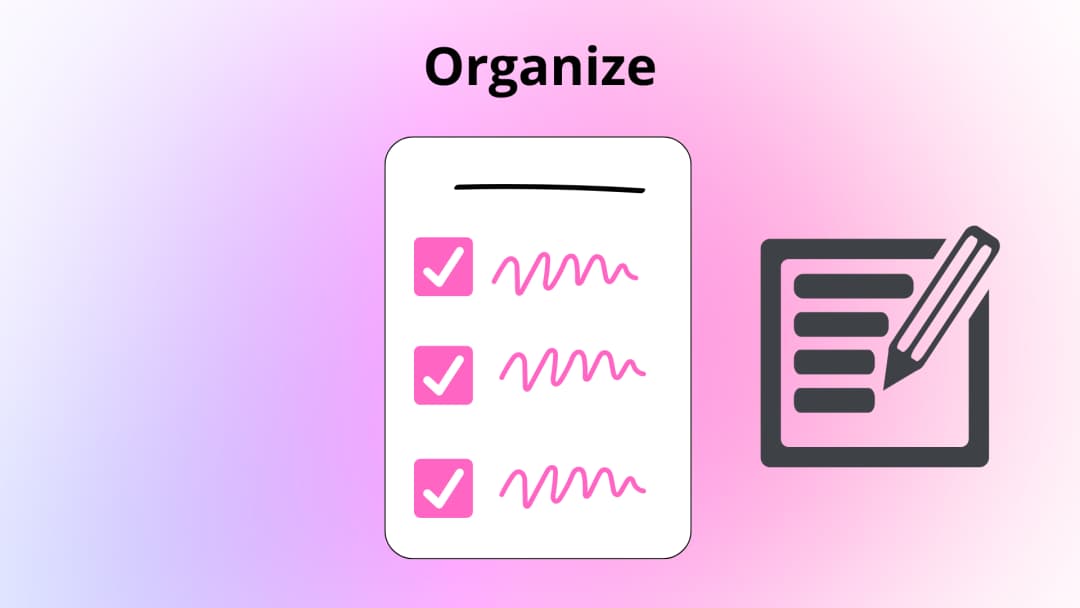
Pillar 1
Organize
The main pillar empties the project owner's mind. It serves to collect and list all your project tasks in the same place, without any specific order.
Productivity Tool sample: To-Do List
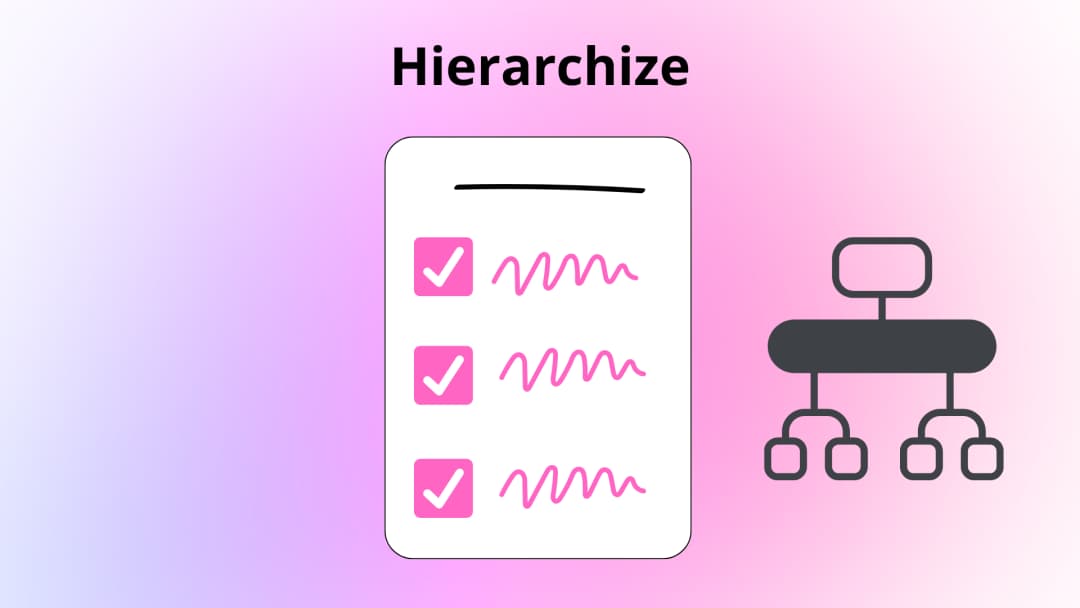
Pillar 2
Hierarchize
The secondary pillar clearly classifies tasks in order to position them visually.
Productivity Tool sample: Kanban
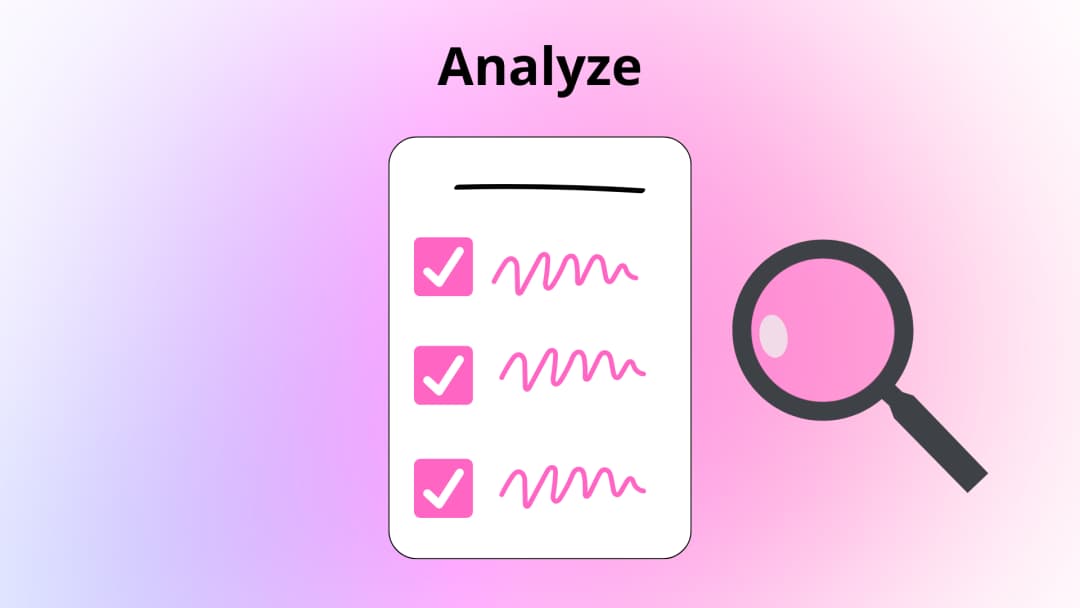
Pillar 3
Analyze
The 3rd pillar serves to measure the efficiency and value of each task. It is a transitional pillar that evaluates with great precision the weight of the most difficult tasks to execute.
Productivity Tool sample: Pareto (80/20)
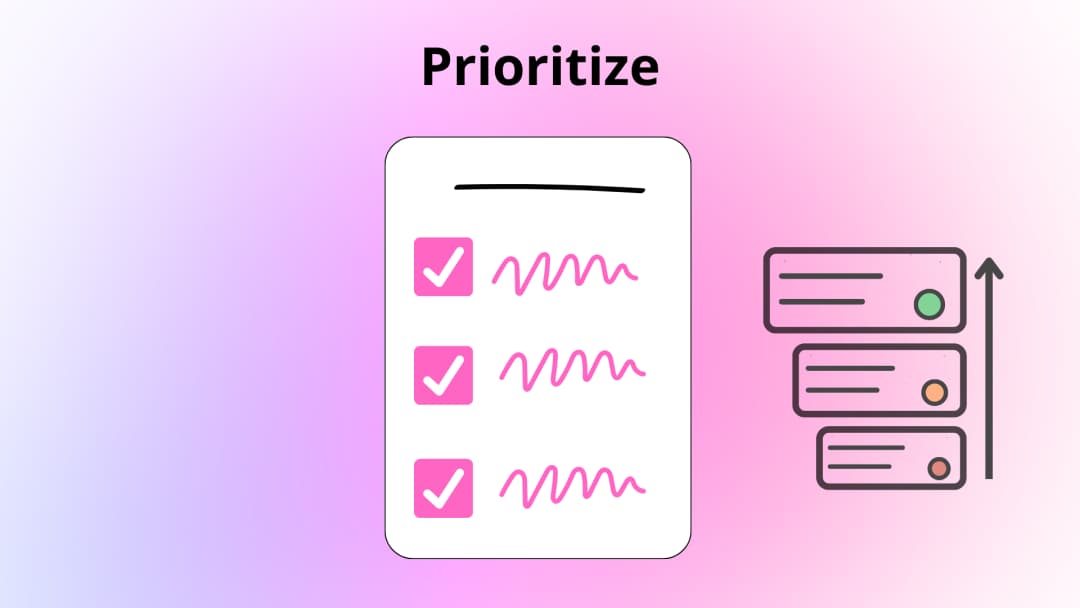
Pillar 4
Prioritize
The 4th pillar is the final step that allows for effective action on what needs to be done. It avoids working on secondary tasks by focusing on the most important tasks of a project.
Productivity Tool sample: Eisenhower Matrix
These 4 pillars must represent your mental framework to properly carry out the execution of your projects:
- You structure your ideas to see clearly.
- You hierarchize to clarify your work.
- You analyze the value of your tasks.
- You prioritize main tasks over secondary tasks.
You Are Now Ready to Manage Your Tasks Effectively!
This guide provides the foundation needed to master your organization. As demonstrated, effective task management requires clear discipline and relies on multiple moving parts. The factors presented here are the exact ones that most heavily stall personal and professional goals. Ultimately, optimizing your workflow depends on daily productivity, which serves as the ultimate catalyst to overcome every organizational obstacle.
"To foresee is both to anticipate the future and to prepare for it. To foresee is already to act."— Henri Fayol